I've been tinkering with different tunings since I got my first six string lap steel in 1972 (A C# E G# B E). Here are some of the most interesting results of this decades-long journey of discovery. |
||||||||||||||||||||||||||||||||||||||||||||||||||||||||||||||||||||||||||||||||||||||||||||||||||||||||||||||||||||||||||||||||||||||||||||||||||||||||||||||||||||
Desert Rose S-8
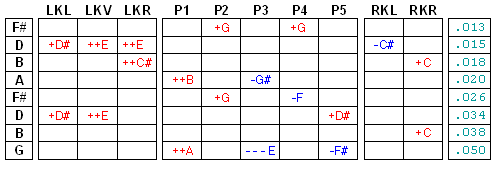
I call this copedent D6/G (D6th over G). It gives me the basic features of the standard E9th and C6th tunings in a smaller, simpler instrument. Most builders stopped making 8 string pedal steels in the early 1960's, before the changer mechanisms had matured enough to handle a triple-raise, double lower copedent. My Desert Rose S-8 was custom-built in 2009 by Chuck Back to support this unusual hybrid tuning. |
||||||||||||||||||||||||||||||||||||||||||||||||||||||||||||||||||||||||||||||||||||||||||||||||||||||||||||||||||||||||||||||||||||||||||||||||||||||||||||||||||||
Williams D-12 Crossover
|
||||||||||||||||||||||||||||||||||||||||||||||||||||||||||||||||||||||||||||||||||||||||||||||||||||||||||||||||||||||||||||||||||||||||||||||||||||||||||||||||||||
| For several years I played a Williams
400X double 12 with
5 pedals and 5 knee levers. A unique "crossover" mechanism switched all
of the pedals and levers from one neck to the other, creating the equivalent
of 10 pedals and 10 levers. I no longer own this guitar.
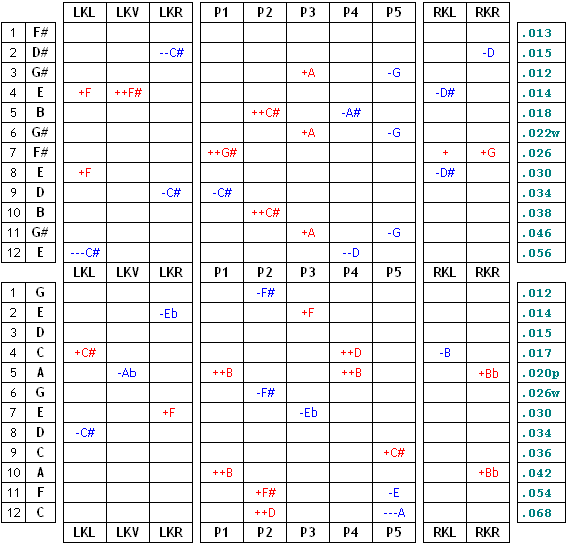
The front neck was set up to extended E9th. The back neck was similar to the standard C6th, but also included D strings between the C's and E's. The resulting linear pentatonic scale positions are very intuitive for improvising lead lines in blues and rock, while the pedals provide all of the jazz chords that you expect from the back neck. |
||||||||||||||||||||||||||||||||||||||||||||||||||||||||||||||||||||||||||||||||||||||||||||||||||||||||||||||||||||||||||||||||||||||||||||||||||||||||||||||||||||
| On the extended E9th: | ||||||||||||||||||||||||||||||||||||||||||||||||||||||||||||||||||||||||||||||||||||||||||||||||||||||||||||||||||||||||||||||||||||||||||||||||||||||||||||||||||||
| Right Knee Left includes a compensator that raises the middle F# about 12 cents. I tune the open F# to be in tune with the first pedal C#, and raise it with the compensator to be in tune with the open B in the LKR position. | ||||||||||||||||||||||||||||||||||||||||||||||||||||||||||||||||||||||||||||||||||||||||||||||||||||||||||||||||||||||||||||||||||||||||||||||||||||||||||||||||||||
| Many players raise and lower their E strings on the same knee. I did that for many years, but then I discovered that putting them on opposite knees gave me an extra full-step change. In the F lever (C# major) position, you can move smoothly between the 2nd and 3rd degree of the scale by releasing one lever as you engage the other (LKL and RKL on my chart above). | ||||||||||||||||||||||||||||||||||||||||||||||||||||||||||||||||||||||||||||||||||||||||||||||||||||||||||||||||||||||||||||||||||||||||||||||||||||||||||||||||||||
| I sometimes use the first pedal with LKL and P2 to get big, strummable power chord. It's a C# major with doubled root and fifth: 1 5 1 1 3 5 5 1 3 5. | ||||||||||||||||||||||||||||||||||||||||||||||||||||||||||||||||||||||||||||||||||||||||||||||||||||||||||||||||||||||||||||||||||||||||||||||||||||||||||||||||||||
Learning the Back Neck
|
||||||||||||||||||||||||||||||||||||||||||||||||||||||||||||||||||||||||||||||||||||||||||||||||||||||||||||||||||||||||||||||||||||||||||||||||||||||||||||||||||||
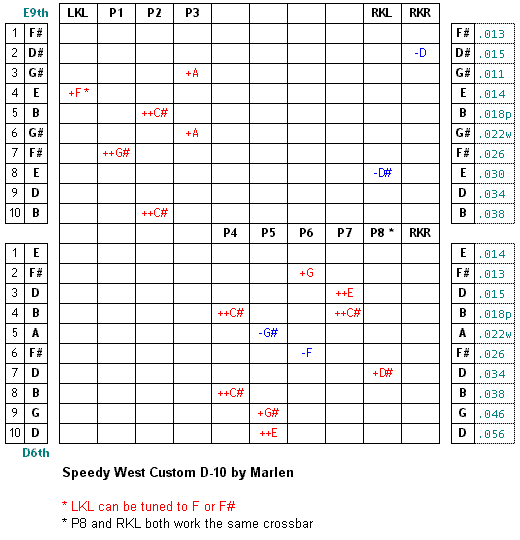
| For my gigs with the Country All-Stars in the 1990's,
I sometimes played an antique Speedy West Custom double ten. This beautiful
instrument has a primitive pull-release changer that will not allow a string
to be both raised and lowered. I set up the front neck with the essential
E9th changes, and I raised the back neck from C6th to D6th because I needed the higher timbre to cut through the big band sound.
The band broke up, and I no longer own this guitar. |
||||||||||||||||||||||||||||||||||||||||||||||||||||||||||||||||||||||||||||||||||||||||||||||||||||||||||||||||||||||||||||||||||||||||||||||||||||||||||||||||||||
F Diatonic 12-string |
||||||||||||||||||||||||||||||||||||||||||||||||||||||||||||||||||||||||||||||||||||||||||||||||||||||||||||||||||||||||||||||||||||||||||||||||||||||||||||||||||||
|
||||||||||||||||||||||||||||||||||||||||||||||||||||||||||||||||||||||||||||||||||||||||||||||||||||||||||||||||||||||||||||||||||||||||||||||||||||||||||||||||||||
| I've always been interested in diatonic tunings. In 1995 I published an article about adding pedals to Jerry Byrd's C Diatonic tuning. Since writing that article, I've applied the same principles to a tuning that's a fourth higher, my Concert F diatonic tuning. It doesn't sound "Country" at all - I've used it for classical, progressive rock and new age music. I have it set up on a Sierra Olympic S-12. I have another page that shows it as a 10 string tuning, from when I used to have it on the back neck of a different Sierra. | ||||||||||||||||||||||||||||||||||||||||||||||||||||||||||||||||||||||||||||||||||||||||||||||||||||||||||||||||||||||||||||||||||||||||||||||||||||||||||||||||||||
Vintage 8 String C6th |
||||||||||||||||||||||||||||||||||||||||||||||||||||||||||||||||||||||||||||||||||||||||||||||||||||||||||||||||||||||||||||||||||||||||||||||||||||||||||||||||||||
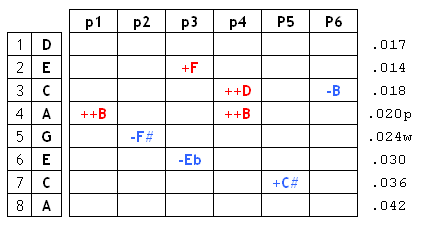
I like tinkering with vintage pedal steels. Here's a C6th copedent that I have on a Rickenbacker 8 string. It contains the standard western swing chord voicings, and it's what I recommend for anyone who is learning to play on an antique pedal steel.
|
||||||||||||||||||||||||||||||||||||||||||||||||||||||||||||||||||||||||||||||||||||||||||||||||||||||||||||||||||||||||||||||||||||||||||||||||||||||||||||||||||||
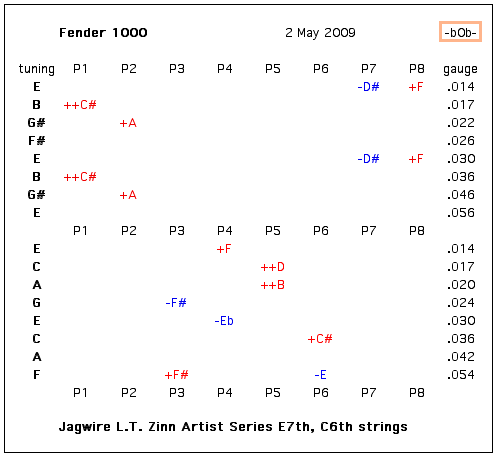
The Fender 1000 is a double 8 pedal steel that was produced in the late 50's and early 60's. It has 8 pedals and no knee levers. I had mine tuned to Eadd9 and C6, with standard E9th/C6th pulls. Here's a link to a song that uses both necks of the Fender 1000, recorded direct without an amplifier or volume pedal: Country Fryd in A
I no longer own a Fender 1000, but I used the learnings from this copedent to develop my Desert Rose S-8. |
||||||||||||||||||||||||||||||||||||||||||||||||||||||||||||||||||||||||||||||||||||||||||||||||||||||||||||||||||||||||||||||||||||||||||||||||||||||||||||||||||||
Hawaiian Guitar Roots |
||||||||||||||||||||||||||||||||||||||||||||||||||||||||||||||||||||||||||||||||||||||||||||||||||||||||||||||||||||||||||||||||||||||||||||||||||||||||||||||||||||
| I also play a Fender Stringmaster double 8 (no pedals). It's usually set up like this: | ||||||||||||||||||||||||||||||||||||||||||||||||||||||||||||||||||||||||||||||||||||||||||||||||||||||||||||||||||||||||||||||||||||||||||||||||||||||||||||||||||||
|
||||||||||||||||||||||||||||||||||||||||||||||||||||||||||||||||||||||||||||||||||||||||||||||||||||||||||||||||||||||||||||||||||||||||||||||||||||||||||||||||||||
For blues, rock and recording, I sometimes use a single 8 Sierra Laptop. The Sierra Laptop is the best sounding steel guitar I've ever played. It practically plays itself, it's so smooth! Lately I've been tuning it to an E pentatonic scale:
|
||||||||||||||||||||||||||||||||||||||||||||||||||||||||||||||||||||||||||||||||||||||||||||||||||||||||||||||||||||||||||||||||||||||||||||||||||||||||||||||||||||